Introduction
When several people around you suddenly develop fever, cough, sore throat, body aches, weakness, stomach problems, or headaches, it is natural to wonder whether there is one particular illness going around.
The answer is usually more complicated. Different infections can circulate at the same time, and similar symptoms can come from very different causes. In Pakistan during the 2026 monsoon period, health authorities have warned about several illnesses, including dengue, malaria, chikungunya, typhoid, diarrheal diseases, and other infections associated with rainfall, standing water, sanitation problems, and mosquito breeding.
At the same time, respiratory illnesses such as colds, flu, COVID-19, and other viral infections can cause overlapping symptoms. Recent reporting from Karachi has also described an increase in cough, flu, fever, and respiratory complaints.
So rather than assuming that every current illness is “the same virus,” it is better to look at the symptom pattern, timing, local conditions, and warning signs.
What Illnesses Are Going Around Right Now?
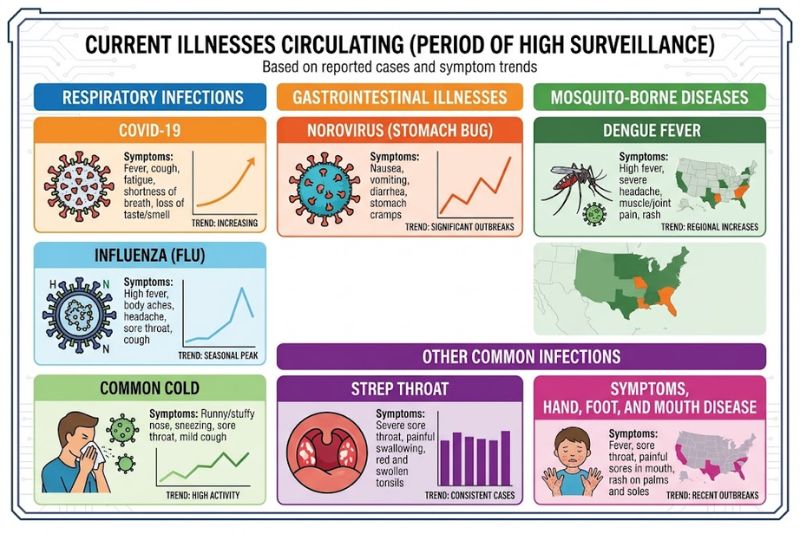
There is no single illness that can be identified from the phrase “something is going around.” Several infections may be circulating simultaneously.
The most relevant possibilities depend on where you live and what symptoms you have.
Respiratory viral infections
Common respiratory infections can cause:
- Cough
- Sore throat
- Runny or blocked nose
- Fever
- Headache
- Body aches
- Tiredness
- Sometimes chills
Influenza, COVID-19, respiratory syncytial virus (RSV), and ordinary cold viruses can overlap considerably in their symptoms. The CDC uses respiratory-illness surveillance that covers illnesses ranging from common colds to influenza, RSV, and COVID-19.
This means symptoms alone may not always tell you exactly which respiratory virus is responsible.
Dengue
Dengue deserves particular attention in Pakistan because it is a mosquito-borne infection that can become more common during and after rainy periods.
Typical dengue symptoms include:
- Sudden high fever
- Severe headache
- Pain behind the eyes
- Muscle, joint, or bone aches
- Nausea or vomiting
- Loss of appetite
- Rash
- Fatigue
WHO notes that dengue symptoms commonly begin around 4–10 days after an infected mosquito bite.
Dengue can initially look similar to other illnesses, which is why a person with significant fever and body aches should not automatically assume it is simply “the flu.”
Malaria
Malaria is another mosquito-borne illness that can occur in Pakistan. Fever, chills, sweating, headache, weakness, and body aches can occur, although symptoms vary.
Because malaria and dengue can overlap with other febrile illnesses, testing may be necessary when a clinician suspects one of them.
Chikungunya
Chikungunya is another mosquito-borne viral infection that can cause fever and significant joint pain.
It can be difficult to distinguish from dengue or other viral illnesses based only on symptoms. A healthcare professional may recommend testing depending on the symptoms and local disease activity.
Stomach and waterborne infections
Monsoon conditions can also increase the risk of illnesses associated with contaminated food or water.
These may cause:
- Diarrhea
- Vomiting
- Stomach cramps
- Nausea
- Fever
- Weakness
- Dehydration
Pakistan’s National Institute of Health has warned that monsoon conditions can increase the risk of diseases including acute watery diarrhea, cholera, typhoid, hepatitis A and E, dengue, malaria, and chikungunya.
The important point is that not every fever or body ache is caused by the same infection.
Why Does It Feel Like Everyone Is Getting Sick?

When many people around you become ill within a short period, several factors may be responsible.
Seasonal changes
Changes in weather can influence how people interact, how mosquitoes reproduce, and how certain infections spread.
During Pakistan’s monsoon season, rainfall and standing water can create conditions that increase mosquito breeding and contribute to some waterborne and vector-borne diseases.
Close contact
Respiratory viruses can spread more easily when people spend time together at home, work, school, public transport, or other crowded settings.
Mosquito breeding
Rainwater that remains in containers, drains, rooftops, discarded objects, or other areas can provide breeding sites for mosquitoes.
Contaminated food or water
Flooding, waterlogging, damaged sanitation systems, and contaminated drinking water can increase the risk of gastrointestinal infections.
That is why a community can experience several different types of illness at the same time.
How Can You Tell What Illness You Might Have?
Symptoms can provide clues, but they usually cannot confirm the exact infection by themselves. Several illnesses can produce fever, headache, fatigue, and body aches.
A simple way to think about the symptoms is to look for the dominant pattern.
Fever with strong body and joint aches
A sudden fever combined with significant muscle or joint pain can occur with dengue, chikungunya, influenza, COVID-19, and other infections.
If the fever is high or persistent, particularly during a period of mosquito-borne disease activity, it is worth speaking with a healthcare professional rather than assuming it is a routine viral infection.
Cough and sore throat
Cough, congestion, runny nose, and sore throat are more typical of respiratory infections.
Influenza and COVID-19 can also cause fever, fatigue, headaches, and body aches, so symptoms alone may not distinguish them reliably. Testing can be useful when knowing the specific infection would affect treatment, isolation, or care decisions.
Fever with chills or sweating
Fever accompanied by chills or sweating can occur with malaria and several other infections.
If you have recently been exposed to mosquitoes and develop significant or recurring fever, medical evaluation is especially important.
Diarrhea and vomiting
Diarrhea and vomiting point more toward a gastrointestinal infection, foodborne illness, or another condition affecting the digestive system.
The biggest immediate concern is often dehydration, particularly in children, older adults, and people who are already weak.
Watch for:
- Very little urine
- Dry mouth
- Extreme thirst
- Dizziness
- Severe weakness
- Confusion
When Should You Get Medical Help?
Most mild respiratory infections improve with rest, fluids, and time. However, some symptoms require prompt medical attention.
Seek urgent medical care if you develop:
- Difficulty breathing
- Chest pain or pressure
- Confusion or unusual difficulty staying awake
- Severe weakness
- Fainting
- Signs of severe dehydration
- Persistent vomiting
- Severe abdominal pain
- Unusual bleeding
- Blood in vomit or stool
- A rapidly worsening condition
For suspected dengue, warning signs can become particularly important around the time a fever begins to improve. WHO identifies severe abdominal pain, persistent vomiting, bleeding, rapid breathing, and changes in alertness among warning signs requiring urgent medical attention.
Do not wait for symptoms to become extreme if you are worried about a serious infection.
What Should You Do If You Have Fever?
If you develop a fever, focus first on monitoring your condition rather than trying to guess the illness from one symptom.
1. Rest and drink enough fluids
Fever, sweating, vomiting, and diarrhea can all increase fluid loss.
Drink fluids regularly. If you are losing substantial fluids through vomiting or diarrhea, an oral rehydration solution may help replace water and electrolytes.
2. Monitor your symptoms
Keep track of:
- Temperature
- How long the fever has lasted
- New symptoms
- Vomiting or diarrhea
- Breathing difficulties
- Rash
- Severe pain
- Hydration and urination
A changing symptom pattern can provide useful information to a healthcare professional.
3. Consider testing when appropriate
A doctor may recommend testing for conditions such as dengue, malaria, influenza, or COVID-19 depending on your symptoms, exposure, location, and local disease activity.
Testing is more reliable than trying to identify an illness based only on symptoms.
4. Reduce the chance of spreading infection
If you have respiratory symptoms, avoid close contact with vulnerable people when possible. Cover coughs and sneezes, wash your hands regularly, and consider wearing a well-fitting mask when you need to be around others.
If mosquito-borne illness is suspected, preventing additional mosquito bites is also important.
How Can You Protect Yourself From Illness?
You do not need to know exactly which infection is circulating to take sensible precautions.
Protect yourself from mosquitoes
During periods of increased mosquito activity:
- Use mosquito repellent.
- Wear clothing that covers exposed skin.
- Use window screens where possible.
- Sleep under a mosquito net when appropriate.
- Remove standing water around your home.
- Empty water from containers, trays, tires, and other objects where mosquitoes can breed.
These measures are particularly relevant for preventing mosquito-borne illnesses such as dengue and chikungunya.
Be careful with food and water
To reduce the risk of gastrointestinal infections:
- Drink safe water.
- Wash hands before eating.
- Wash fruits and vegetables properly.
- Avoid food that has been stored unsafely.
- Be cautious with food from questionable sources.
- Keep cooked food protected from contamination.
Reduce respiratory spread
If you are sick with a cough or fever:
- Stay home when practical.
- Avoid close contact with vulnerable people.
- Improve ventilation indoors.
- Wash your hands regularly.
- Cover coughs and sneezes.
- Consider testing when appropriate.
These simple measures can reduce the chance of passing respiratory infections to other people.
Can You Tell If It Is Flu, COVID, or Dengue?
Not reliably from symptoms alone.
There can be substantial overlap between infections. For example, fever, headache, fatigue, and body aches may occur with influenza, COVID-19, and dengue.
Some symptoms provide useful clues, but they should not be treated as a diagnosis.
| Symptom pattern | Possible causes |
|---|---|
| Cough, sore throat, congestion | Cold, flu, COVID-19, other respiratory viruses |
| Fever with severe body aches | Flu, dengue, COVID-19, chikungunya, other infections |
| Fever with strong joint pain | Chikungunya, dengue, other infections |
| Fever with mosquito exposure | Dengue, malaria, chikungunya |
| Diarrhea and vomiting | Gastrointestinal infection, foodborne illness, other causes |
| Fever with unusual bleeding | Requires prompt medical assessment |
This table is only a general guide. A symptom pattern cannot replace medical testing or professional evaluation when an infection may be serious.
What About Children and Older Adults?
Children and older adults can become dehydrated or seriously ill more quickly with some infections.
Pay particular attention to:
- Difficulty drinking
- Repeated vomiting
- Reduced urination
- Extreme sleepiness
- Confusion
- Difficulty breathing
- Persistent or worsening fever
- Significant weakness
For infants, young children, older adults, and people with significant underlying health problems, contacting a healthcare professional sooner is often appropriate.
Common Mistakes to Avoid When You Are Sick
When several illnesses are circulating, it is easy to make assumptions about what is causing your symptoms. A few mistakes are especially worth avoiding.
Assuming every fever is the flu
Fever can occur with many infections, including respiratory illnesses, dengue, malaria, and gastrointestinal infections.
If your symptoms do not fit a typical cold or flu pattern, or they are getting worse, consider medical advice rather than relying on a guess.
Ignoring mosquito exposure
If you live in or have recently visited an area with increased mosquito activity, do not overlook the possibility of a mosquito-borne illness.
Fever combined with significant body or joint pain may warrant medical evaluation, particularly during periods when dengue, malaria, or chikungunya are circulating.
Taking antibiotics without medical advice
Antibiotics treat certain bacterial infections, not viral illnesses such as influenza or COVID-19.
Taking an antibiotic unnecessarily will not treat a viral infection and can contribute to antibiotic resistance and other unwanted effects.
Waiting too long when warning signs appear
Most minor infections do not require emergency treatment. However, serious warning signs should not be ignored.
Difficulty breathing, severe dehydration, confusion, unusual bleeding, persistent vomiting, severe abdominal pain, or rapidly worsening symptoms deserve prompt medical attention.
Focusing only on the fever
The number on a thermometer is useful, but it is not the only thing that matters.
Pay attention to the person’s overall condition, hydration, breathing, alertness, pain, and whether symptoms are improving or worsening.
Practical Tips for Managing an Illness at Home
For a mild illness without warning signs, basic supportive care can make recovery easier.
Rest when you need it. Your body needs energy to recover, so avoid unnecessary physical exertion while you are unwell.
Drink fluids regularly. Water, soups, and other suitable fluids can help maintain hydration. Oral rehydration solution can be useful when significant fluid is lost through diarrhea or vomiting.
Eat what you can tolerate. You do not necessarily need a special diet. Choose simple foods if your appetite is low and return to your normal diet as you feel better.
Monitor changes. Keep track of fever and new symptoms instead of checking only once and assuming the condition will remain the same.
Avoid unnecessary medicines. Before taking medication, check the label and follow appropriate dosing instructions. If dengue is a possibility, ask a healthcare professional about which fever or pain medicines are appropriate rather than self-medicating.
Limit close contact when contagious illness is possible. This is particularly important around older adults, infants, and people with weakened immune systems.
When Should You Consider a Doctor or Clinic Visit?
Consider contacting a healthcare professional if:
- Your fever persists or keeps returning.
- Symptoms are getting worse rather than better.
- You have significant body or joint pain.
- You have repeated vomiting or diarrhea.
- You are struggling to maintain hydration.
- You have recently had substantial mosquito exposure.
- You have a medical condition that increases your risk of complications.
- You are caring for a very young child or older adult who is becoming increasingly unwell.
A clinician can determine whether you need testing and which tests are appropriate.
What illness is going around right now?
There is not necessarily one single illness going around. Respiratory viruses such as flu, COVID-19, and common cold viruses can circulate alongside mosquito-borne and gastrointestinal illnesses. In Pakistan’s monsoon season, dengue, malaria, chikungunya, typhoid, and diarrheal diseases are also important health concerns.
Is there a virus going around with fever and body aches?
Yes. Several viral infections can cause fever and body aches, including influenza, COVID-19, dengue, and chikungunya. Symptoms overlap, so the exact cause cannot always be identified without medical evaluation or testing.
How do I know if my fever is dengue?
You cannot reliably diagnose dengue from symptoms alone. Fever accompanied by severe headache, pain behind the eyes, muscle or joint pain, nausea, vomiting, or rash can occur with dengue, but other illnesses can produce similar symptoms. Testing and professional evaluation may be needed.
Can flu and dengue symptoms look similar?
Yes. Both can cause fever, headache, tiredness, and body aches. Dengue is also associated with symptoms such as pain behind the eyes, nausea, vomiting, rash, and significant muscle or joint pain. A healthcare professional can help determine whether testing is appropriate.
Should I get tested if I have a fever?
Testing depends on your symptoms, how long you have been sick, your exposure history, and the illnesses currently circulating in your area. If the fever is persistent, severe, or accompanied by concerning symptoms, medical evaluation is more important than trying to diagnose yourself.
How can I avoid getting sick during monsoon season?
Reduce mosquito breeding sites, protect yourself from mosquito bites, drink safe water, maintain good hand hygiene, handle food safely, and take sensible precautions around people with respiratory symptoms.
When is a fever an emergency?
The seriousness of a fever depends on the person’s age, overall health, symptoms, and the cause. Difficulty breathing, confusion, severe dehydration, unusual bleeding, persistent vomiting, severe abdominal pain, fainting, or rapidly worsening illness are reasons to seek urgent medical care.
The Bottom Line
If it feels like everyone is getting sick, there may be several illnesses circulating at the same time rather than one mysterious infection.
Respiratory viruses can cause cough, sore throat, fever, and body aches, while monsoon conditions in Pakistan can increase concerns about mosquito-borne and waterborne diseases such as dengue, malaria, chikungunya, typhoid, and diarrheal infections.
The safest approach is to focus on your actual symptoms, how they are changing, your recent exposures, and any warning signs. Mild symptoms can often be managed with rest and adequate fluids, but persistent or severe symptoms deserve professional assessment.
Most importantly, do not assume that every fever is the same illness. When the diagnosis matters, testing and medical evaluation are more reliable than guessing from symptoms alone.