


Introduction
Nutrition facts can tell you much more about a food than the words on the front of a package. A product may say “healthy,” “low fat,” or “no added sugar,” but the Nutrition Facts label gives you specific information about serving size, calories, fat, carbohydrates, protein, sodium, sugars, and selected vitamins and minerals.
The difficult part is knowing which numbers matter and how to interpret them. If you are new to reading food labels, you do not need to memorize every nutrient. Start with the serving size, calories, major nutrients, and % Daily Value (%DV). These provide a practical starting point for comparing packaged foods.
Nutrition Facts at a Glance
When reading a Nutrition Facts label, check these areas first:
- Serving size: Find out how much food the listed numbers represent.
- Calories: Shows the energy provided by one serving.
- Total fat: Includes saturated and trans fat.
- Carbohydrates: Includes dietary fiber, total sugars, and added sugars.
- Protein: Shows the amount of protein per serving.
- Sodium: Useful when comparing foods that may be high in salt.
- % Daily Value: Helps you understand whether a nutrient is relatively low or high in one serving.
A key point is that the numbers usually apply to one serving, not necessarily the entire package. If you eat two servings, you generally consume twice the listed calories and nutrients.
What Are Nutrition Facts?
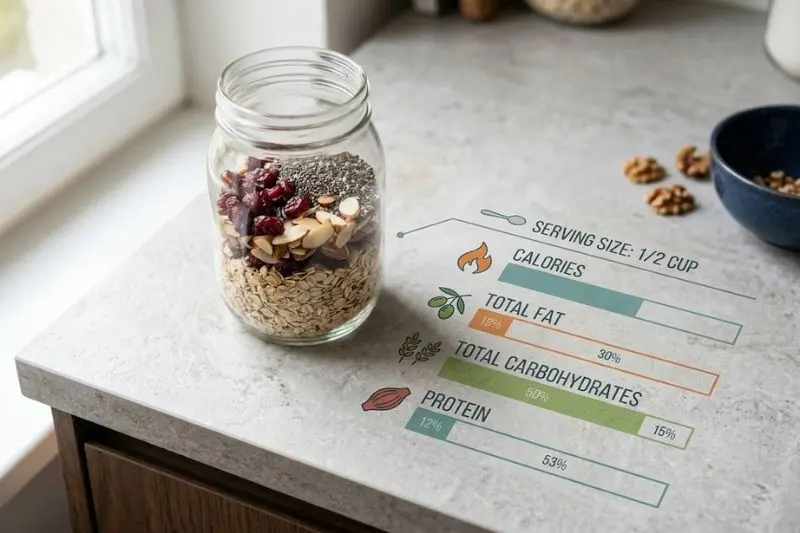
Nutrition Facts are the nutritional details provided on a packaged food or drink label. They help consumers understand what nutrients and calories they are getting from a particular serving.
The exact label format can vary by country, but common information includes calories, fat, carbohydrates, protein, sodium, sugars, fiber, and certain vitamins and minerals.
For example, a Nutrition Facts panel may tell you that one serving contains a certain number of calories along with specific amounts of fat, carbohydrate, protein, sodium, and other nutrients. The important thing is to connect those numbers to the serving size rather than looking at them in isolation.
Why Nutrition Facts Matter
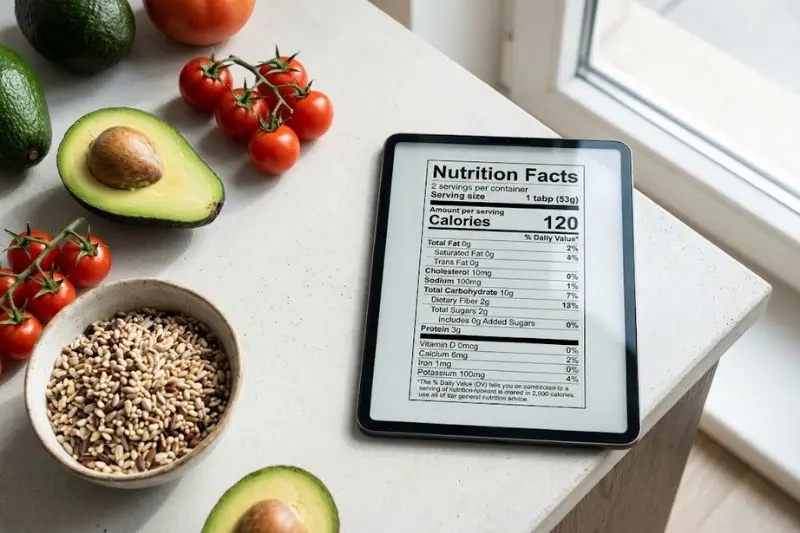
Food labels can make it easier to compare similar products. Instead of relying only on packaging claims, you can look at measurable information.
For example, when choosing between two packaged snacks, you might compare:
- Serving size
- Calories per serving
- Saturated fat
- Sodium
- Added sugars
- Dietary fiber
- Protein
This does not mean that one number automatically determines whether a food is “good” or “bad.” Your overall diet, nutritional needs, and the amount you eat also matter.
A Simple Rule for Beginners
Do not judge a food from one number alone.
Look at the serving size first, then consider the overall nutrient profile.
How to Start Reading a Nutrition Facts Label
Check the Serving Size First
The serving size is one of the most important parts of the label because the nutrient information is usually based on it.
A package might contain several servings even though it looks like one portion to you. FDA guidance specifically recommends checking both the serving size and the number of servings per container.
For example, if a package contains two servings and you eat the entire package, you need to account for both servings rather than using the numbers for one serving.
The serving size is also not a recommendation of how much you should eat. It is a standardized reference used on the label.
Look at Calories
Calories represent the energy you get from a serving of food or drink. On U.S. Nutrition Facts labels, calories are displayed prominently to make them easier to find.
A commonly used general reference is 2,000 calories per day, but individual energy needs can be higher or lower depending on factors such as age, sex, body size, and physical activity.
That means the 2,000-calorie figure should not automatically be treated as everyone’s personal requirement.
How to Read the Main Nutrients
Once you understand serving size and calories, the next step is to look at the nutrients. You do not need to treat every nutrient equally. Focus on the ones that are most relevant to your food choices.
Total Fat
Total fat includes different types of fat. The label may separately list saturated fat and trans fat.
Fat is an essential nutrient, but different types of fat have different effects on health. For packaged foods, checking saturated and trans fat can help you compare products rather than looking only at the total fat number.
Carbohydrates
Total carbohydrate can include:
- Dietary fiber
- Total sugars
- Added sugars
These categories are different, so a food containing carbohydrates is not automatically equivalent to another food with the same total carbohydrate amount.
Dietary fiber is a type of carbohydrate that the body does not fully digest. Foods such as vegetables, fruits, legumes, and whole grains can provide fiber.
Total Sugars and Added Sugars
This distinction is particularly useful when comparing packaged foods.
Total sugars include sugars naturally present in foods as well as sugars added during processing.
Added sugars are sugars added during the processing of foods, including ingredients such as sugar, syrups, and similar caloric sweeteners. The Nutrition Facts label lists added sugars separately on U.S. labels.
For example, a food can contain naturally occurring sugar while having little or no added sugar. Looking at both numbers gives you more information than simply looking at “sugar.”
Protein
Protein is another major nutrient shown on Nutrition Facts labels.
Foods can provide protein from different sources, including meat, fish, eggs, dairy products, beans, lentils, nuts, seeds, and other foods.
When comparing products, protein can be useful to consider alongside calories and the other nutrients rather than treating a high-protein number as automatically meaning that the food is healthier.
Sodium
Sodium is commonly listed on packaged-food labels and is worth checking when comparing similar products.
Two foods that look similar can contain very different amounts of sodium. Checking the label can therefore help you choose between products when sodium intake is something you need to monitor.
Understanding % Daily Value
The % Daily Value (%DV) tells you how much a nutrient in one serving contributes to a daily diet based on the Daily Value used for the label.
It can be especially helpful when comparing two products.
A simple way to use %DV is:
Lower %DV: generally means less of that nutrient per serving.
Higher %DV: generally means more of that nutrient per serving.
However, whether “more” or “less” is desirable depends on the nutrient. For example, you may generally want to limit nutrients such as saturated fat and sodium while looking for adequate amounts of nutrients such as dietary fiber.
How to Compare Two Similar Foods
Suppose you are choosing between two packaged breakfast products. Instead of asking only, “Which one is healthier?”, compare the labels systematically.
Step 1: Compare Serving Sizes
Make sure you are comparing similar amounts. Different serving sizes can make one product appear lower or higher in nutrients even when the foods are actually quite similar.
Step 2: Compare Calories
Check how many calories each serving provides.
If you normally eat more than one serving, remember to account for every serving you consume.
Step 3: Check Saturated Fat and Sodium
These can help distinguish between otherwise similar products.
Step 4: Check Added Sugars and Fiber
For foods such as cereals, snacks, and packaged breakfast products, these numbers can provide useful additional information.
Step 5: Look at Protein
Protein can be another useful comparison point, particularly when comparing foods that are intended to contribute substantially to a meal.
Why the Ingredient List Also Matters
The Nutrition Facts panel tells you how much of certain nutrients the food contains. The ingredient list tells you what ingredients are used to make the food.
These two parts of the label therefore answer different questions.
For example, if you want to understand what type of oil, grain, sweetener, or other ingredient is present, the ingredient list can provide information that the Nutrition Facts panel cannot.
Using both sections together gives you a more complete picture of a packaged food.
A Practical Label-Reading Example
Imagine you are comparing two snack products.
Product A has a smaller listed serving size, while Product B has a larger serving size. Product A therefore appears lower in calories at first glance.
Before deciding, you would:
- Compare the serving sizes.
- Compare calories for equivalent amounts where appropriate.
- Check saturated fat.
- Compare sodium.
- Check total and added sugars.
- Look at dietary fiber.
- Consider protein.
- Review the ingredient lists.
This approach prevents you from making a decision based on a single attractive number.
The main lesson is simple: serving size comes first. Once you know what amount the numbers represent, the rest of the label becomes much easier to interpret.
Common Mistakes When Reading Nutrition Facts
Even when people know how to read a food label, a few common mistakes can lead to misunderstanding the information.
Mistake 1: Ignoring the Serving Size
This is one of the easiest mistakes to make. A package may look like one portion but contain multiple servings.
Always check servings per container before interpreting the calories or nutrient amounts.
Mistake 2: Looking Only at Calories
Calories are important, but they do not tell you everything about a food.
Two foods can have similar calorie amounts while providing very different amounts of protein, fiber, sodium, added sugars, or saturated fat.
A better approach is to consider the overall nutrient profile.
Mistake 3: Assuming “Low Fat” Means Healthy
A product described as low fat is not automatically the best choice. It may still contain substantial amounts of other nutrients you want to consider, such as added sugars or sodium.
Read the Nutrition Facts panel instead of relying only on front-of-package claims.
Mistake 4: Confusing Total Sugars With Added Sugars
Total sugars and added sugars are not the same thing.
Checking the added-sugars line can help you understand how much sugar was added during production rather than simply counting all sugars together.
Mistake 5: Comparing Products With Different Serving Sizes
If one product lists a smaller serving than another, directly comparing the numbers can be misleading.
Always check the serving sizes before comparing two labels.
How to Make Better Food Choices Using Nutrition Facts
Nutrition labels work best as a comparison tool, not as a system for putting foods into simple “good” and “bad” categories.
When comparing similar products, ask:
- Which product has a more useful serving size for the way I actually eat?
- How many calories does my usual portion provide?
- Which has less saturated fat or sodium when that matters?
- Which provides more dietary fiber or protein when those nutrients are priorities?
- How much added sugar does each contain?
- What does the ingredient list tell me?
This approach gives you more context than focusing on a single nutrient.
When Nutrition Facts Are Not Enough
A Nutrition Facts label is useful, but it does not provide every piece of information about a person’s diet.
For example, the label does not tell you whether a particular food fits your personal dietary needs, allergies, medical requirements, or overall eating pattern.
If you have a medical condition or specific nutritional requirements, a qualified healthcare professional or registered dietitian can help you understand how food choices fit your individual needs.
What should I look at first on a Nutrition Facts label?
Start with the serving size and servings per container. Then look at calories and the nutrients that are most relevant to your food choice.
Are calories the most important part of a Nutrition Facts label?
No. Calories provide information about energy, but the overall nutrient profile also matters. Look at nutrients such as protein, dietary fiber, saturated fat, sodium, and added sugars depending on the food and your needs.
What is the difference between total sugar and added sugar?
Total sugars include both naturally occurring sugars and added sugars. Added sugars are sugars incorporated into a food during processing.
Why is serving size so important?
Because the nutrient amounts listed on the label are based on the stated serving. If you eat multiple servings, you need to account for the additional amounts.
Should I avoid foods with fat?
Not necessarily. Fat is a nutrient, and foods can contain different types of fat. Instead of judging a food only by total fat, consider the types and the food’s overall nutritional profile.
Expert Tips for Reading Labels Faster
You do not need to study every number every time you buy food. With practice, you can develop a quick routine:
- Serving size → 2. Calories → 3. Key nutrients → 4. Added sugars → 5. Ingredient list
When comparing similar products, use the same process for both. This makes differences easier to spot.
Another useful habit is to consider how much you actually eat, rather than assuming the labeled serving is the amount you will consume.
Conclusion
Nutrition Facts labels become much easier to understand when you follow a consistent order. Start with serving size, then check calories and the nutrients that matter most for the food you are choosing.
Do not rely on a single number or a marketing claim on the front of a package. Use the Nutrition Facts panel together with the ingredient list and consider the food within your overall eating pattern.
The goal is not to make every food choice perfectly. It is to have enough reliable information to make more informed choices when comparing foods.


1 Comment
Pingback: How To Boost Immunity Against Seasonal Diseases