Introduction
Seasonal changes can bring more exposure to respiratory infections, colds, flu, and other illnesses. While no food, drink, or supplement can make your immune system invincible, everyday habits can support normal immune function and help you stay healthier.
The most useful approach is not a quick “immunity booster.” It is a combination of balanced nutrition, enough sleep, regular physical activity, stress management, good hygiene, and appropriate vaccination. Harvard Health notes that the immune system is a complex system that depends on balance rather than simply being “boosted.”
What Does It Mean to Support Your Immune System?

Your immune system is your body’s defense network against harmful organisms such as bacteria and viruses. It includes many cells, tissues, organs, and biological processes that work together.
Because it is a system rather than a single organ, there is no simple food or supplement that can instantly strengthen every part of it. Supporting immune health is mainly about giving your body the nutrients and healthy conditions it needs to function properly.
A 2023 review of foods and immunity highlights the role of a varied diet in providing nutrients involved in normal immune function.
1. Eat a Balanced, Nutrient-Rich Diet
Food is one of the most practical places to start when you want to support your immune system.
Instead of focusing on one “superfood,” aim for variety. Include vegetables, fruits, whole grains, legumes, nuts, seeds, and suitable sources of protein in your regular meals.
Important nutrients involved in immune function include vitamins A, C, D and E, zinc, selenium, and other nutrients. Yeditepe University Hospital recommends a balanced intake of foods such as carrots, spinach, eggs, oranges, broccoli, nuts, garlic, mushrooms, and legumes during seasonal changes.
A simple meal could include:
- Eggs or another protein source
- Whole-grain bread or another whole grain
- Spinach or other vegetables
- An orange or another fruit
- Nuts or seeds as a snack
The goal is consistency rather than searching for one food that supposedly prevents illness.
2. Add More Fruits and Vegetables
Fruits and vegetables provide vitamins, minerals, fiber, and other plant compounds that contribute to a healthy diet.
Some useful choices include:
- Oranges and other citrus fruits: good sources of vitamin C
- Red bell peppers: rich in vitamin C
- Broccoli: provides vitamins and antioxidant compounds
- Spinach: contains vitamin C, beta-carotene, and other nutrients
- Garlic: contains sulfur-containing compounds
- Kiwi and papaya: provide vitamin C and other nutrients
- Nuts and seeds: provide nutrients such as vitamin E and selenium
A review of immune-supporting foods and current nutrition guidance both emphasize dietary variety rather than relying on a single food.
One important point is that food should support your overall diet, not replace medical treatment. No single food can prevent or cure an infection.
3. Get Enough Quality Sleep
Sleep is another important part of a healthy routine.
Poor or insufficient sleep can make it harder to maintain overall health and may interfere with normal immune processes. A regular sleep schedule can also make healthy habits easier to maintain.
Try to:
- Go to bed and wake up at consistent times.
- Keep your bedroom comfortable and quiet.
- Reduce unnecessary screen use close to bedtime.
- Avoid making late-night work or entertainment a daily habit.
- Give yourself enough time to sleep rather than treating sleep as leftover time.
Sleep should be viewed as part of your health routine, not something to sacrifice whenever life becomes busy. MD Anderson specifically emphasizes the importance of sleep when discussing ways to support immune health.
4. Stay Physically Active
Regular physical activity supports overall health and can be part of a healthy immune-supporting lifestyle.
You do not necessarily need an intense workout program. Walking, cycling, swimming, strength exercises, or other activities you can perform consistently can be useful.
For many people, the bigger challenge is sitting for long periods and being inactive throughout the day. Adding movement to your routine can be as simple as:
- Taking a daily walk.
- Using stairs when practical.
- Stretching after long periods of sitting.
- Choosing an activity you actually enjoy.
- Building exercise gradually if you have been inactive.
Health guidance on immune health commonly combines regular physical activity with healthy nutrition, sleep, and other lifestyle habits rather than treating exercise as a standalone cure.
5. Manage Long-Term Stress
Stress is a normal part of life, but persistent stress can affect sleep, eating habits, activity levels, and overall well-being.
You do not need to eliminate every stressful situation. Instead, develop practical ways to manage it.
You could try:
- Short walks
- Breathing exercises
- Meditation
- Time away from screens
- Talking with someone you trust
- Organizing your workload
- Relaxing hobbies
- Maintaining a consistent sleep routine
MD Anderson recommends relaxation techniques, short meditation, and talking about fears or concerns as possible ways to manage stress.
6. Drink Enough Fluids
Hydration is easy to overlook when thinking about immune health.
Water supports many normal body functions, so regular fluid intake should be part of your everyday routine. Your needs can vary depending on factors such as weather, activity, diet, and health status.
Rather than waiting until you are extremely thirsty, make drinking fluids a regular habit throughout the day.
Good options can include:
- Water
- Milk
- Unsweetened beverages
- Soups
- Water-rich fruits and vegetables
Hydration alone does not prevent seasonal infections, but maintaining adequate fluid intake is a basic part of supporting normal health.
7. Keep Good Hygiene Habits
Healthy immune function is only one part of reducing your risk of infection. Limiting exposure to infectious organisms also matters.
Good hygiene habits can include:
- Washing your hands regularly.
- Avoiding touching your eyes, nose, and mouth with unwashed hands.
- Covering coughs and sneezes appropriately.
- Cleaning frequently touched surfaces when needed.
- Avoiding close contact with people who are actively sick when practical.
- Staying home when you are ill if your circumstances allow.
For respiratory illnesses, preventive measures such as hand hygiene and vaccination can work alongside healthy lifestyle habits.
8. Stay Up to Date With Recommended Vaccinations
Vaccination is different from trying to “boost” your immune system with food or supplements.
Vaccines train the immune system to recognize particular pathogens and can reduce the risk of serious disease from certain infections. MD Anderson recommends checking which vaccinations you are eligible for and staying up to date with them.
The vaccines appropriate for you depend on factors such as your age, health, location, occupation, travel, and current public-health recommendations.
If you are unsure which vaccines you need, ask a qualified healthcare professional rather than relying on general advice online.
9. Choose Immune-Supporting Foods Over “Magic” Supplements
The supplement market contains many products advertised as quick immunity boosters. Be cautious with claims that promise dramatic or immediate results.
Harvard Health explains that the idea of simply “boosting” the immune system is misleading because the immune response requires balance. It also notes that there is not good evidence that ordinary vitamin formulations or probiotics can generally provide the disease-fighting benefits often promised by such products.
Supplements can have a role when someone has a nutritional deficiency or a healthcare professional recommends one for a specific reason. But taking large amounts of vitamins or minerals without a clear need is not automatically better.
A better starting point is a varied diet that provides nutrients naturally.
10. Include Foods Rich in Important Nutrients
Some nutrients deserve particular attention because they contribute to normal immune function.
Vitamin C
Vitamin C is found in foods such as citrus fruits, red peppers, broccoli, and kiwi. It is an essential nutrient and plays several roles in normal body function.
Good food sources include:
- Oranges
- Lemons
- Guava
- Kiwi
- Bell peppers
- Broccoli
Eating vitamin C-rich foods regularly is more useful than waiting until you become sick and expecting a large dose to act as a cure.
Vitamin E
Vitamin E is an antioxidant nutrient involved in normal immune function. Almonds, sunflower seeds, and some plant foods provide vitamin E.
Zinc
Zinc is another nutrient involved in normal immune function. Food sources include certain seafood, meat, dairy foods, nuts, seeds, and legumes.
However, more is not always better. Excessive zinc intake can cause problems and may interfere with normal immune function, so avoid taking high-dose supplements without appropriate guidance.
Vitamin A and Carotenoids
Foods such as carrots and leafy green vegetables contain carotenoids, while eggs and other foods provide vitamin A or related nutrients.
A varied diet helps you obtain these nutrients without making one ingredient responsible for your entire immune health.
11. Consider Fermented Foods as Part of a Balanced Diet
Foods such as yogurt can contribute useful nutrients to the diet. Some yogurts contain live cultures, and yogurt can also provide protein and, depending on the product, vitamin D.
Healthline lists yogurt among foods that may support immune health and recommends choosing products with live and active cultures while limiting heavily sugar-loaded varieties.
Other fermented foods may also fit into a balanced diet. However, fermented foods should be viewed as one part of overall nutrition rather than a guaranteed protection against seasonal infections.
12. Avoid Smoking and Limit Excessive Alcohol
Some habits can work against your goal of staying healthy during seasonal illness periods.
Smoking can damage health in many ways, while excessive alcohol consumption can also negatively affect the body.
For people trying to support immune health, replacing harmful habits with healthier routines is generally more meaningful than adding another supplement.
MD Anderson recommends avoiding tobacco and maintaining healthy lifestyle habits when discussing immune support.
13. Do Not Rely on One “Immunity-Boosting” Food
Searches for immunity often focus on individual foods such as garlic, ginger, turmeric, honey, or citrus fruits.
These foods can be nutritious additions to meals, but they should not be treated as cures or guaranteed protection against infection.
For example, Healthline notes that foods such as garlic, ginger, turmeric, citrus fruits, spinach, and broccoli can contribute nutrients associated with immune health, while also emphasizing that no food can prevent or cure infections.
The more useful question is not:
“Which single food boosts immunity the most?”
It is:
“Does my overall diet regularly provide the nutrients my body needs?”
That shift leads to a more realistic and sustainable approach.
14. Build a Simple Seasonal Health Routine
You do not need a complicated routine. A simple daily pattern can make healthy choices easier.
Morning
- Drink water.
- Eat a balanced breakfast.
- Include fruit or vegetables.
- Take prescribed medications or supplements as directed by your healthcare professional.
During the Day
- Eat varied meals.
- Stay physically active.
- Drink fluids regularly.
- Wash your hands when appropriate.
- Take short breaks if you spend long periods sitting or working.
Evening
- Eat a balanced dinner.
- Reduce unnecessary screen use before bed.
- Use a relaxing activity to manage stress.
- Maintain a consistent bedtime.
The purpose is not to create a perfect routine. It is to make healthy behaviors repeatable.
15. What to Do When Seasonal Illness Starts
Supporting your immune system is different from treating an illness.
If you develop symptoms such as fever, persistent cough, difficulty breathing, severe weakness, dehydration, or symptoms that are worsening rather than improving, seek appropriate medical advice.
People with chronic conditions, weakened immune systems, pregnancy, older age, or other risk factors may need medical attention sooner.
Do not rely on an “immune booster” product to treat a potentially serious infection.
Foods That Can Support a Healthy Immune-Supporting Diet
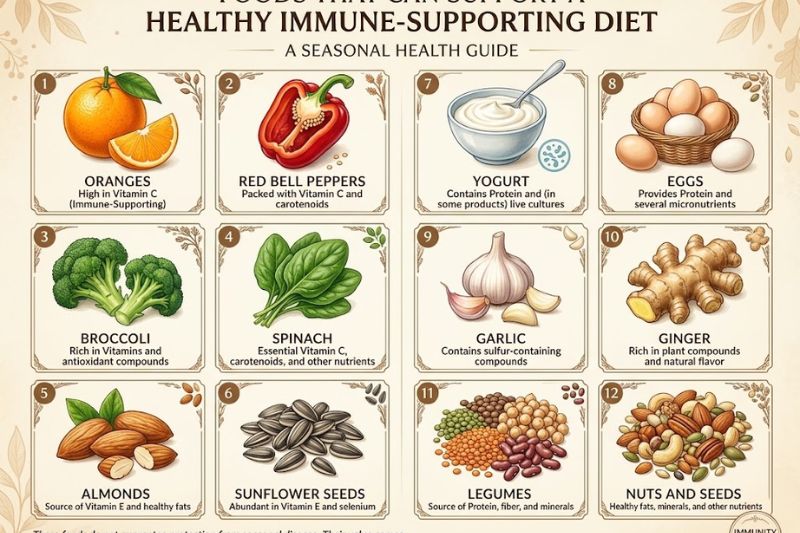
Here are practical foods that can fit into a balanced diet:
| Food | Useful nutrients or components |
|---|---|
| Oranges | Vitamin C |
| Red bell peppers | Vitamin C and carotenoids |
| Broccoli | Vitamins and antioxidant compounds |
| Spinach | Vitamin C, carotenoids and other nutrients |
| Almonds | Vitamin E and healthy fats |
| Sunflower seeds | Vitamin E and selenium |
| Yogurt | Protein and, in some products, live cultures |
| Eggs | Protein and several micronutrients |
| Garlic | Sulfur-containing compounds |
| Ginger | Plant compounds and flavor without relying on processed foods |
| Legumes | Protein, fiber and minerals |
| Nuts and seeds | Healthy fats, minerals and other nutrients |
These foods do not guarantee protection from seasonal disease. Their value comes from contributing to an overall nutritious eating pattern.
Common Mistakes to Avoid
Taking large doses of supplements
More vitamins do not automatically mean stronger immunity. High doses can sometimes cause harm or interact with medicines.
Waiting until you get sick to eat well
Nutrition is an everyday habit. A balanced diet is more useful as a regular routine than as a last-minute response to illness.
Ignoring sleep
Staying up late while expecting supplements or special foods to compensate is not a good long-term strategy.
Believing every immunity claim online
Words such as “detox,” “instant immunity,” or “guaranteed protection” should prompt caution, especially when a product is being sold.
Replacing medical care with home remedies
Foods, rest, and healthy habits can support general health, but they should not replace professional medical care when it is needed.
Can you boost your immune system quickly?
There is no reliable shortcut that can instantly strengthen your immune system. A balanced diet, adequate sleep, physical activity, stress management, healthy habits, and appropriate preventive care are more realistic ways to support immune health.
What foods are best for seasonal immune support?
A varied diet containing fruits, vegetables, whole grains, legumes, nuts, seeds, and suitable protein sources is more useful than relying on one “best” food. Citrus fruits, broccoli, spinach, red peppers, nuts, seeds, yogurt, garlic, and ginger can all fit into a nutritious eating pattern.
Does vitamin C prevent colds?
Vitamin C is an important nutrient for normal health and immune function, but eating vitamin C-rich foods should not be presented as a guaranteed way to prevent infections. No single food can prevent or cure an infection.
Is sleep important for immunity?
Yes. Adequate, regular sleep is an important part of overall health and supports normal immune processes. It should be treated as a basic part of a healthy routine.
Do supplements boost immunity?
Some supplements can be useful when a person has a deficiency or a specific medical need, but supplements should not automatically be assumed to provide powerful immune protection. Harvard Health cautions against the simplistic idea that the immune system can simply be “boosted” with products.
How can I protect myself during seasonal illness periods?
Combine healthy lifestyle habits with practical infection-prevention measures. Eat well, sleep adequately, stay active, manage stress, wash your hands, avoid unnecessary exposure to people who are sick, and stay up to date with recommended vaccinations.
Conclusion
How to Boost Immunity Against Seasonal Diseases Knowing how to boost immunity against seasonal diseases is less about finding a miracle food and more about building habits that support normal immune function throughout the year.
Prioritize a varied diet, adequate sleep, regular movement, stress management, hydration, good hygiene, and appropriate preventive healthcare. Foods such as fruits, vegetables, nuts, seeds, yogurt, legumes, and other nutrient-rich choices can contribute to a strong overall eating pattern.
Most importantly, keep expectations realistic. No single food, supplement, or home remedy can make you immune to seasonal illness. A consistent healthy lifestyle, combined with appropriate medical and preventive care, is the more reliable way to support your health as seasons change.